Digital Twins
High-fidelity simulation environments for testing, validation, and chaos engineering of industrial systems.
The Fourth Industrial Revolution
Industry 4.0 is the integration of advanced digital technologies — the Internet of Things (IoT), artificial intelligence, machine learning, big data analytics, robotics, and manufacturing process control — into traditional industrial processes. These technologies enable smart, interconnected factories and production systems that communicate, analyze, and make data-driven decisions autonomously, driving greater efficiency, productivity, and competitiveness in the global market.
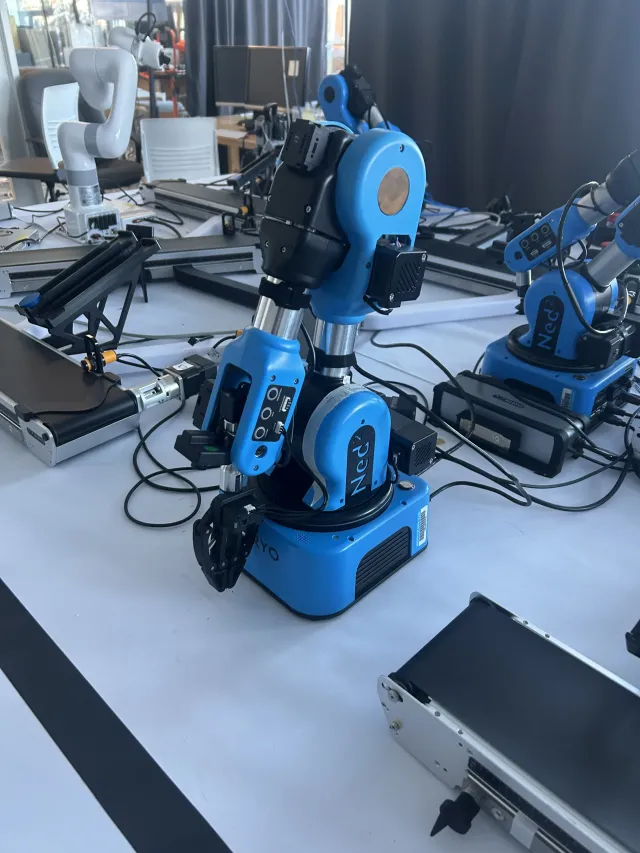
Industry 4.0 isn't a single project — it's the thread that runs through everything we do.
High-fidelity simulation environments for testing, validation, and chaos engineering of industrial systems.
GCode interception, sensor-rich machining, and custom tooling fabrication on in-house equipment.
Production scheduling, multi-agent coordination, and genetic ML algorithms for process control.
Computer vision for real-time defect detection, dimensional measurement, and robotic pick-and-place.
End-to-end sensor data pipelines, SCADA integration, and real-time operational dashboards.
Resilient edge architectures, testbed orchestration, and secure operation under degraded connectivity.
Build the skills to lead in the age of smart manufacturing and digital transformation.
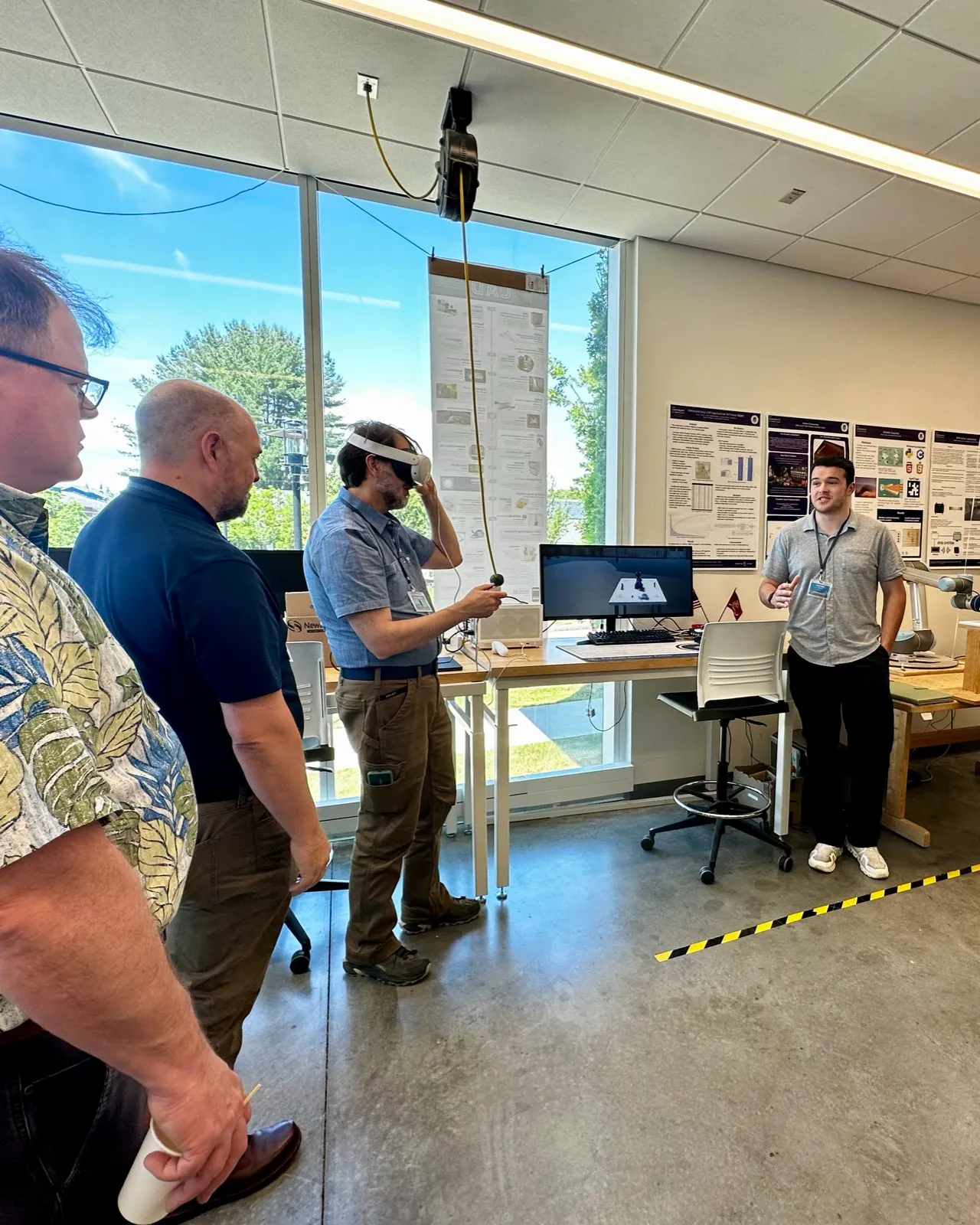
Four graduate-level courses forming a focused, stackable credential.
Complete the certificate entirely online — designed for working professionals.
Practical tools and industry-aligned knowledge you can apply immediately.
Gain hands-on knowledge and insight into the technologies reshaping modern industry:
Topics include cyber-physical systems, IIoT, data analytics and visualization, machine learning and AI in industry, smart manufacturing processes, sensors and SCADA systems, and digital supply chain management. Students also work through real-world case studies and industry projects.
Courses may be taken individually or as part of the certificate sequence. See the University Academic Catalog for prerequisites and enrollment details.